Icons
Icon painting is a traditional technique. The base on which we paint is a wooden surface covered in gesso and sanded down. Then the design is traced on the gesso, gold is added and we start to paint from the dark to the light. This technique is a symbol of the processus of creation: from darkness and chaos to light and order.
La peinture d'icônes est une technique traditionnelle. La base sur laquelle nous peignons est une surface en bois recouverte de gesso et poncée. Ensuite, on trace le dessin sur le gesso, de l'or est ajouté et nous commençons à peindre de l'obscurité à la lumière. Cette technique est un symbole de tout le processus de création: des ténèbres et du chaos à la lumière et à l'ordre.
رسم الأيقونات تقنية تقليدية. القاعدة التي نرسم عليها عبارة عن سطح خشبي مغطى بالجبس ومحفوف. ثم يتم رسم التصميم على الجبس، ويضاف ورق ذهب و نبدأ في الطلاء من الظلام إلى النور. هذه التقنية هي رمز لعملية التكوين: من الظلام والفوضى إلى النور والنظام
ציור אייקונים הוא טכניקה מסורתית. הבסיס שעליו אנו מציירים הוא משטח עץ מכוסה ב"גסו" (שכבה של גיר טבעי). אחר כך אפשר לאוסיף זהב. ואז אנחנו מתחילים לצייר מהחושך לאור. זאת אומר שמאוסיפים צבעים מהצבע הכהה ביותר ועד הבהיר ביותר: לבן. טכניקה זו היא סמל לתהליך בריאת העולם: מחושך וכאוס לאור וסדר.

ICON STYLES
STYLES D'ICÔNES
Sister Abraham who taught me icon painting, was a doctor in ethiopian studies. So, I learned from her the art of ethiopian icons. It is a more naive style of iconography. The figures have large black eyes and are more expressive than in Byzantine icons.
Sœur Abraham, qui m'a appris la peinture d'icônes, était docteur en études éthiopiennes. J'ai donc appris d'elle l'art des icônes éthiopiennes. C'est un style iconographique plus naïf. Les personnages ont de grands yeux noirs et sont plus expressifs que dans les icônes byzantines.
الراهبة إبراهيم التي علمتني رسم الأيقونات كانت مختصة في الدراسات الإثيوبية. لذلك تعلمت منها فن الأيقونات الإثيوبية. إنه أسلوب أكثر بسيط في رسم الأيقونات. تعبير الأشخاص حية أكثر من الايقونات البيزنطية و لها عيون سوداء كبيرة
האחות אברהם שלמדתי ממנה ציור אייקונים, הייתה דוקטור בלימודי אתיופיה. אז למדתי ממנה את האמנות של אייקונים אתיופים. זהו סגנון נאיבי יותר של איקונוגרפיה. לדמויות יש עיניים שחורות גדולות והן אקספרסיביות יותר מאשר בסמלים ביזנטיים.
FROM BIBLE TO ICON
DE BIBLE À ICÔNE
From Sister Abraham I also learned the freedom to compose icons. In the byzantine tradition, icons are never composed by the iconographer but copied. My favorite approach is to study the biblical text in detail and to chose to follow an existing model or to make an original composition.
De sœur Abraham, j'ai également appris la liberté de composer des icônes. Dans la tradition byzantine, les icônes ne sont jamais composées par l'iconographe mais copiées. Ma démarche préférée est d'étudier le texte biblique en détail et de choisir de suivre un modèle existant ou d'en faire une composition originale.
تعلمت من الراهبة إبراهيم أيضًا حرية تأليف الأيقونات. في التقليد البيزنطي لا يتم أبدًا تأليف الأيقونات من المصمم الأيقونات ولكن يتم نسخها. أسلوبي المفضل هو دراسة نص الكتاب المقدس بالتفصيل واختيار اتباع نموذج موجود أو تكوين تصميمة أصلية
מהאחות אברהם למדתי גם את החופש לבנות קומפוזיציות של אייקונים. במסורת הביזנטית, אייקונים לעולם לא מורכבים על ידי האיקונוגרף אלא מועתקים. אני המעדיפה לעשות את זה בלימוד הטקסט המקראי בפירוט ואחר כך אני לבוחרת מודל קיים או מייצרת קומפוזיציה חדשה

GALLERY
GALLERIE
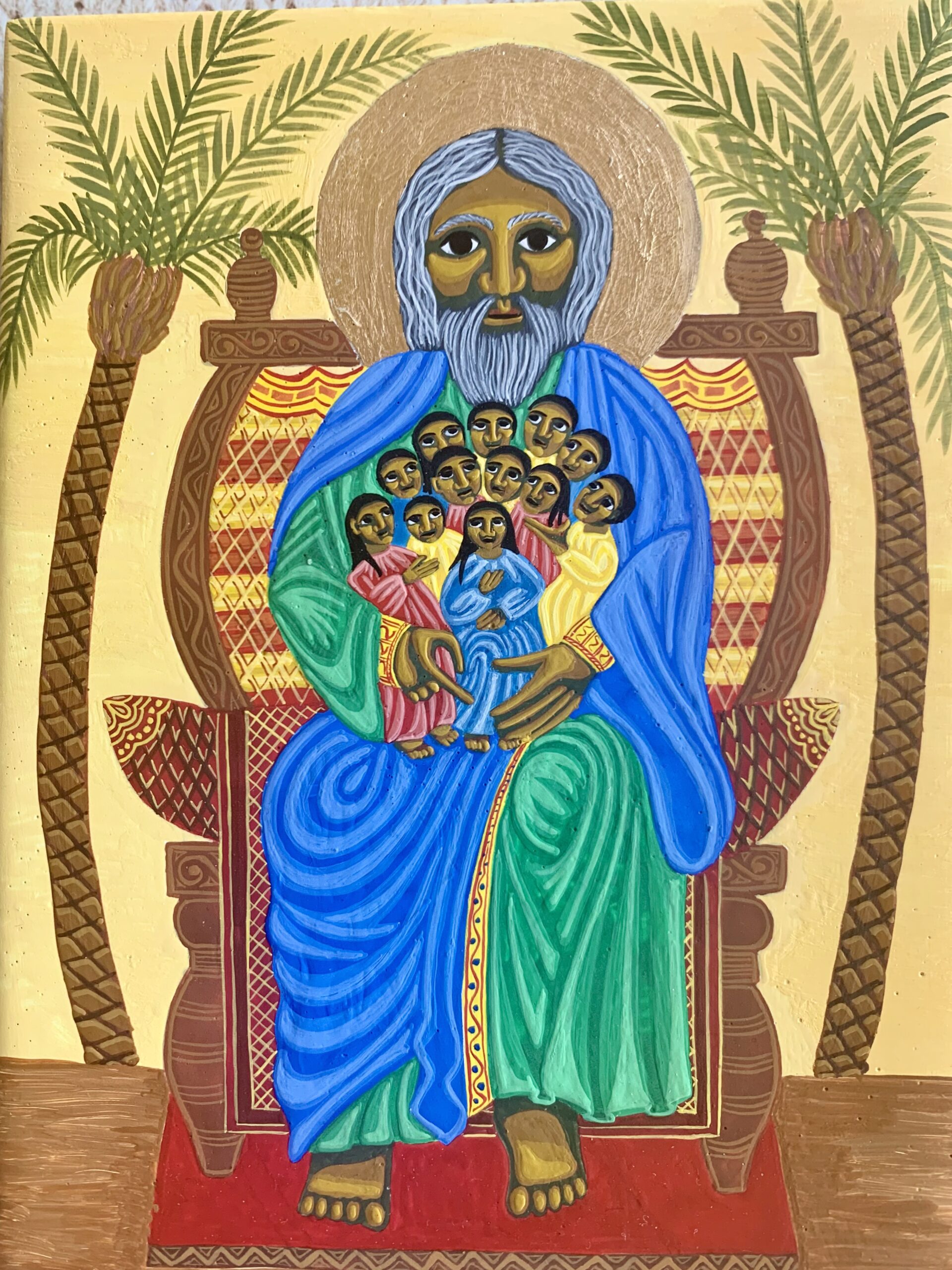
ABRAHAM
MOTHER OF GOD "THE UNBURNT BUSH"
MERE DE DIEU "BUISSON ARDENT"
This icon makes a parallel between the burning bush hosting the presence of God without being consummated and the Virgin Mary hosting the presence of Christ and giving birth to him.
Cette icône fait le lien entre le buisson ardent qui recoît la présence divine brûlante sans être consumé et la Vierge Marie qui accueille la présence du Christ en son sein
MARY AT THE TOMB
MARIE AU TOMBEAU
John 20, 16: "Jesus said to her, "Mary!"
Jean 20, 16: "Jésus lui dit: "Marie!"

JESUS HEALS A POSSESSED MAN
JÉSUS GUÉRIT UN HOMME POSSÉDÉ
Inspired from a miniature in a middle age manuscript.
Inspiré d'une miniature dans un manuscript du Moyen Age.

FLIGHT TO EGYPT
FUITE EN EGYPTE
"Arise, take the young child and his mother, flee to Egypt."
"Lève-toi, prends avec toi l'enfant et sa mère et fuis en Egypte."

CROSS: PASSION AND RESSURECTION
CROIX: PASSION ET RÉSURRECTION
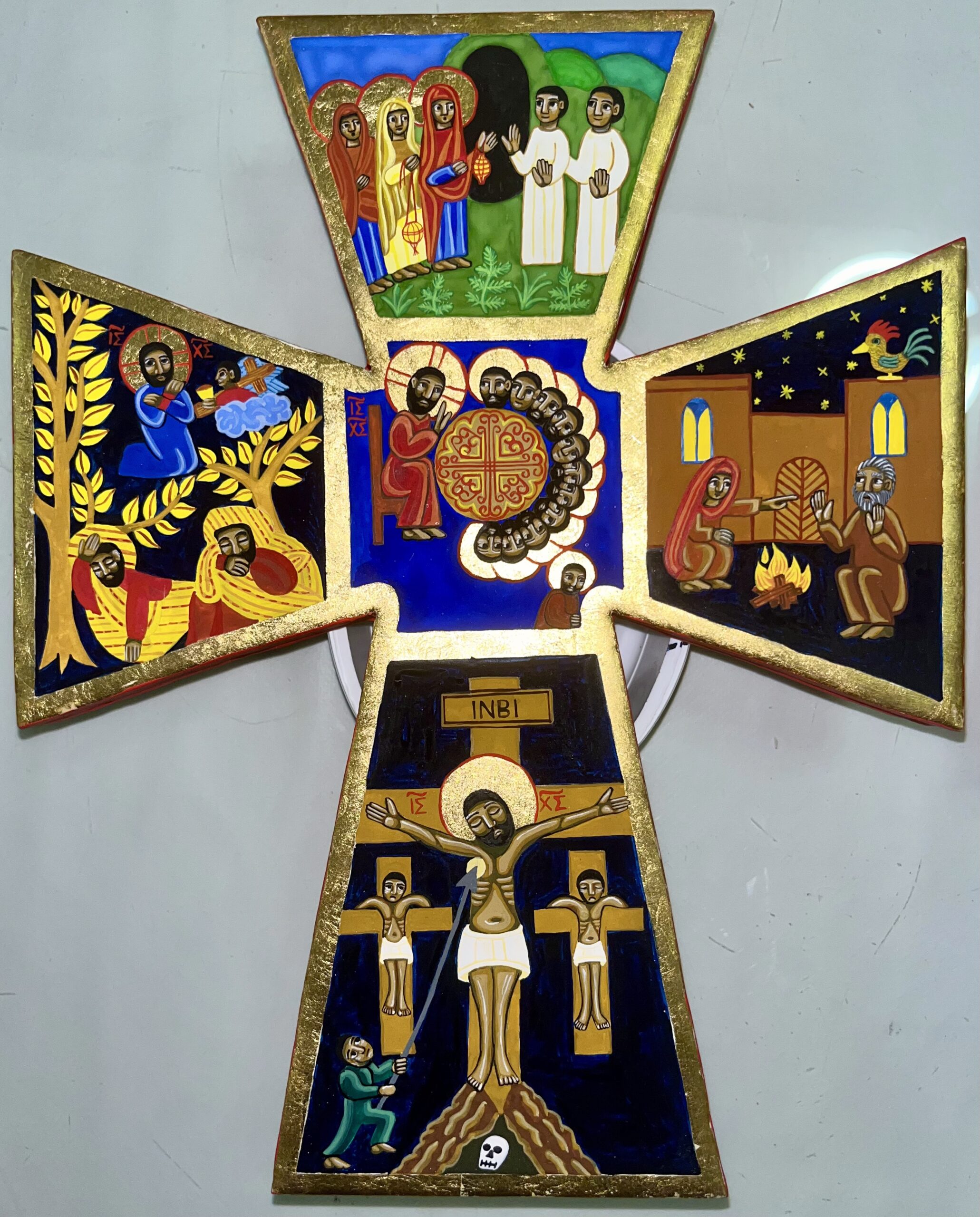
RESSURECTION
RÉSURRECTION
This is a free adaptation of an ethiopian icon from the16th century.
Cette icône est librement adaptée d'une icône éthiopienne du 16ème siècle.

VISITATION
Luke 1, 41: "And it happened, when Elizabeth heard the greeting of Mary, that the babe leaped in her womb; and Elizabeth was filled with the Holy Spirt."
Luc 1, 41: "Au moment, où celle-ci entendit la salutation de Marie, l'enfant remua en elle. Elisabeth fut remplie du Saint-Esprit."


PALMS
LES RAMEAUX
"Hosanna to the Son of David! Blessed is He who comes in the name of the Lord!"
"Hosanna au Fils de David! Béni soit au nom du Seigneur celui qui vient!"

PUBLIC LIFE OF CHRIST
VIE PUBLIQUE DU CHRIST
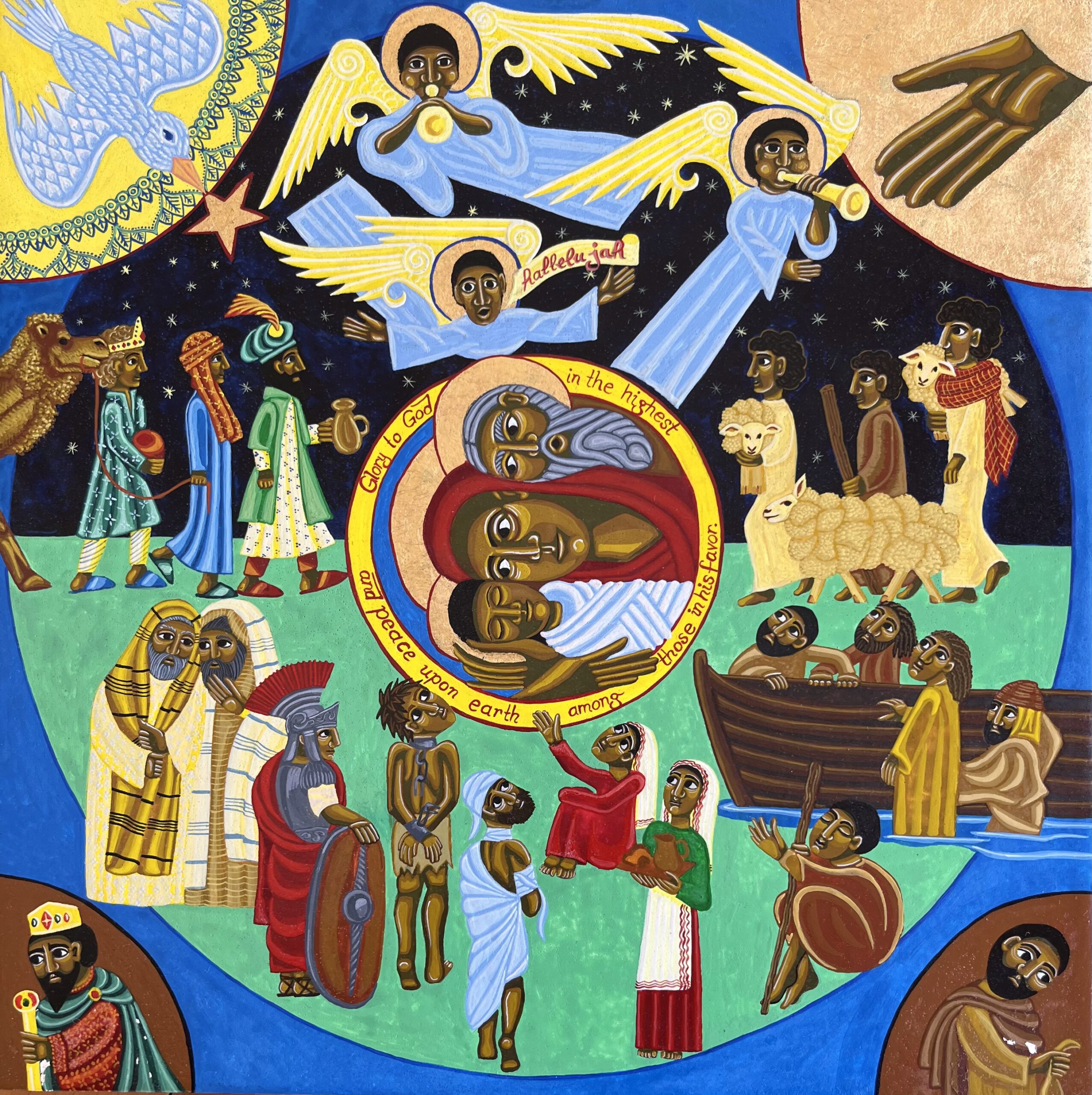
GO TO THE DEEP
ALLEZ EN EAUX PROFONDES
Luke 5, 4: "He said to Simon, Put to the deep, and lower your nets for a haul."
Luc 5, 4:"Il dit à Simon: "Avance plus loin, là où l'eau, est profonde, puis, toi et tes compagnons, jetez vos filets pour pêcher."
EMMAUS
Ethiopian representation of the disciples at Emmaus. One of the two disciples is a woman! " Did not our heart burn within us while He talked with us on the road, and while he opened the Scriptures to us?" Luke 24, 32
Représentation éthiopienne des pélerins d'Emmaus. Un des deux disciples est une femme!" Notre coeur ne brûlait-il pas en nous tandis qu'il nous parlait en chemin et nous ouvrait les Ecritures? " Luc 24, 32

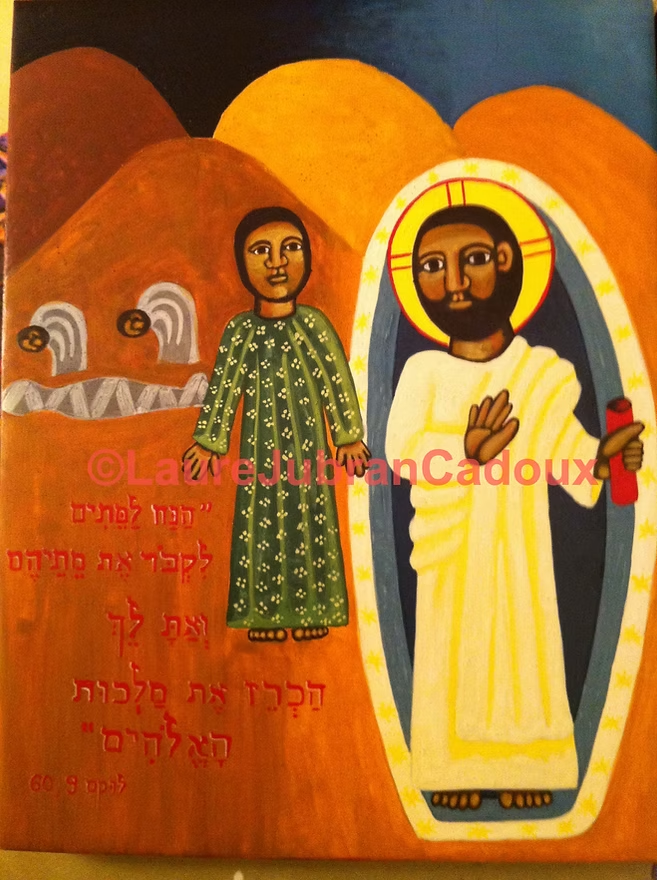
"LET THE DEAD BURY THE DEAD"
"LAISSE LES MORTS ENTERRER LES MORTS"
"Let the dead bury their ow dead, but you go and preach the kingdom of God."
"Laisse les morts enterrer leurs morts, mais toi va annoncer le Règne de Dieu."